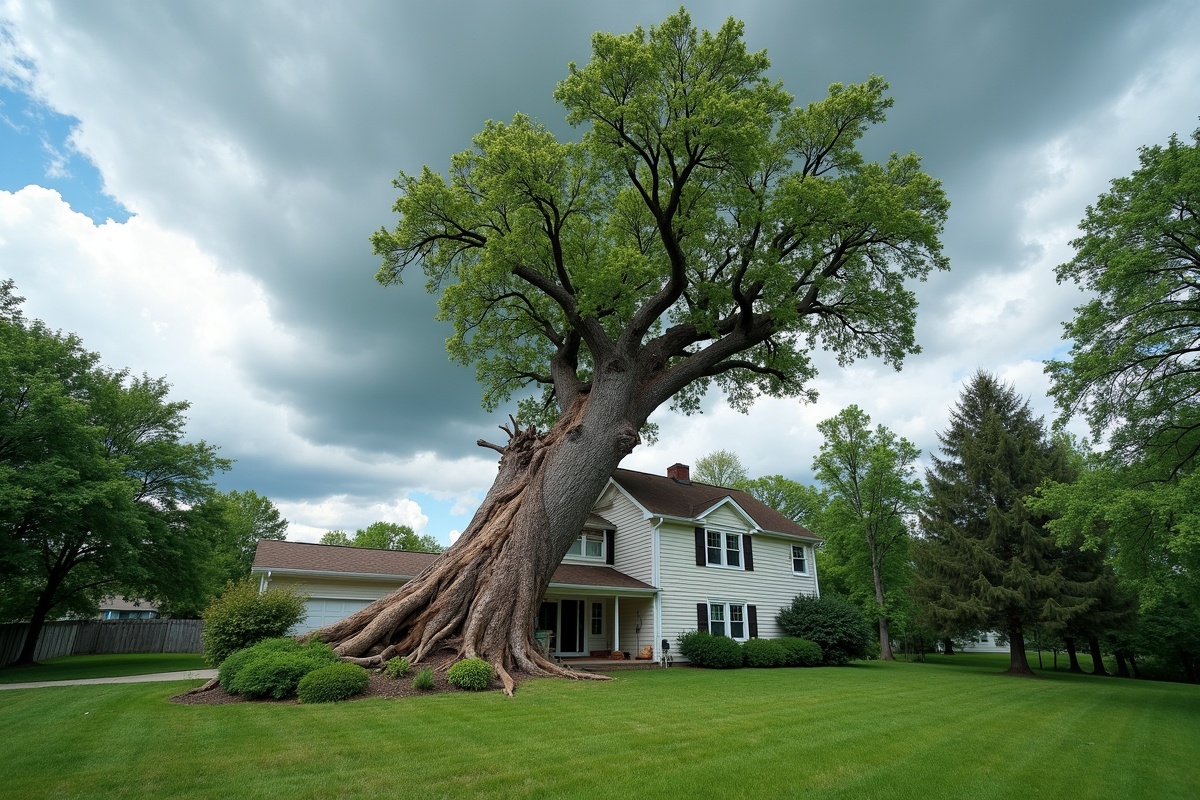
Most trees are assets. The white oaks shading the older streets near downtown Murfreesboro and MTSU, the tulip poplars towering over larger lots, the maples planted in every subdivision from Blackman to Christiana — properly maintained, these trees provide real value: shade that cuts cooling costs through a Middle Tennessee summer, wildlife habitat, curb appeal, and sometimes decades of irreplaceable character.
But a tree in poor structural condition — dead, diseased, structurally compromised, or root-damaged — is a different story. In Rutherford County, where spring brings tornadoes and damaging straight-line winds and winter brings periodic ice storms, a hazardous tree isn’t just an eyesore. It’s a liability.
The challenge is that many of the most dangerous trees don’t look particularly alarming from the street. You don’t need to be an ISA Certified Arborist to notice warning signs, but you do need to know what to look for. This guide focuses on the specific warning signs that Murfreesboro homeowners should know for the trees most common here: oaks, maples, hackberries, and the fast-growing soft-wood species that fail so often in our storms.
Why Hazard Trees Are a Particular Concern in Murfreesboro
Middle Tennessee conditions create specific factors that make hazard tree assessment genuinely important here:
Tornado and severe-storm history. Rutherford County sits in an active severe-weather corridor. The April 2009 “Good Friday” EF-4 tornado carved a 23-mile path from Eagleville to Lascassas; a July 2024 tornado and 80 mph straight-line winds tore through central Murfreesboro; and severe storms in 2025 dropped trees across the county. Post-storm surveys consistently show that the trees that failed were disproportionately the ones with pre-existing structural issues, disease, or neglected maintenance.
Ice storms. The historic February 2015 ice storm coated the region and brought down hundreds of trees and power lines. Even a modest glaze of freezing rain adds enormous weight to a canopy — enough to tear out limbs and split entire trees, particularly soft-wooded species.
Rocky, shallow soils. Much of Rutherford County sits over shallow limestone bedrock, which forces many trees into wide but shallow root systems. Those root systems anchor poorly once the surrounding clay is saturated by heavy rain, so trees can uproot at lower wind speeds than you’d expect.
Pest and disease pressure. Emerald ash borer has killed ash trees across Tennessee, and oak wilt and various cankers and root rots affect local hardwoods. A tree stressed by pests or disease is a tree more likely to fail in a storm.
Warning Signs Specific to Oaks
Oaks — white, willow, water, and others — are the backbone of Murfreesboro’s mature canopy. Healthy oaks are strong and long-lived, but mature oaks can develop serious structural problems, and because they’re large and often close to homes, those problems carry significant risk.
Large Dead Branches in the Crown
Dead branches in an oak crown — “widow makers” — are the single most common hazard sign. A dead limb doesn’t fall on a schedule. It can come down on a still day, during a storm, or when wind or ice shakes the canopy.
What to look for:
- Branches with no leaves during the growing season while surrounding branches are fully leafed
- Branches with dry, cracked bark and visible gray or bleached wood
- Brittle branch tips that contrast with the flexible twigs on healthy parts of the tree
- Mushrooms or fungal growth on large limbs (a sign of decay in that limb)
A single small dead branch is normal. What’s concerning is multiple large dead branches, or a whole section of the crown where the wood has died back.
Included Bark in Co-Dominant Stems
This is one of the most important structural defects in oaks and hackberries — and one of the least visible from the ground. Many trees develop two or more main stems that split from a common base. When those stems press together at a tight angle, bark becomes embedded in the union — “included bark.”
A healthy stem union has a collar — a ridge of wood that wraps around the base of the stem, providing support. An included-bark union lacks this collar. The stems are essentially just pressing against each other with bark in between — a weak connection that can fail, often catastrophically, under storm or ice load.
How to spot it: Look at the crotch where two major stems diverge. A healthy union shows a visible ridge or collar; an included-bark union shows a tight, compressive groove with embedded bark, sometimes with a vertical crease. The tighter the angle, the worse the included bark tends to be.
Horizontal Limbs With Excessive Span or End-Weight
Long horizontal limbs with significant end-weight can develop cracks and splitting stress over time, and they’re exposed to lift force in high winds and extra load under ice.
Warning signs:
- Visible cracks where the limb connects to the main trunk
- Slight downward sag that has increased over time
- Previous storm damage (split, cracked, or braced limbs from earlier events)
- Limbs passing over your roofline, driveway, or living areas
Fungal Growth at the Base of the Trunk
Bracket fungi (conks) at the base of the trunk — large, shelf-like mushrooms attached to bark or roots — are a serious warning sign of wood decay in the root system or trunk base. A tree with significant basal rot has less structural integrity than it appears.
What to look for:
- Shelf-like, bracket, or mushroom growth on the trunk below about 5 feet
- Clusters of smaller mushrooms emerging from roots or at the soil line
- Soft or discolored bark at the base
Not all fungi on trees are dangerous, but basal fungi associated with the root system or trunk wood warrant a professional evaluation.
Sudden or Progressive Lean
A lean that appeared or increased — particularly after a heavy rain or storm — points to root problems.
Urgency signals:
- Soil cracking or lifting on the side opposite the lean
- Visible exposed roots on one side
- The lean appeared suddenly, rather than developing over years
A suddenly leaning oak near a structure is an urgent situation, not a “next month” situation.
Warning Signs Specific to Maples and Soft-Wood Trees
Middle Tennessee’s most common storm failures aren’t always the big oaks — they’re the fast-growing, soft-wooded trees planted in subdivisions everywhere: silver maples, Bradford (Callery) pears, and to a lesser extent red maples and hackberries. These trees fail differently, and knowing their warning signs is important because they can go quickly.
Weak, Tight Branch Unions (Especially Bradford Pears)
Bradford pears are notorious for a tight, upright branch structure where many stems crowd out of nearly the same point. That structure looks tidy for the first 10 to 15 years — then the tree reaches a size where those weak unions can’t hold, and it splits apart in a single wind or ice event. If you have a mature Bradford pear with multiple upright stems crowding a common base, treat it as a high-risk tree.
Soft, Fast-Grown Wood
Silver maples grow fast and produce weak, brittle wood. Large silver maples shed limbs readily in wind and are among the first trees to fail under ice load. Cracks at branch unions, past limb failures, and heavy end-weight on long limbs are all warning signs.
Cavities and Old Wound Sites
Fast-growing species wall off wounds poorly, so old pruning cuts, storm breaks, and mower or string-trimmer damage at the base can develop into cavities and decay pockets. Soft spots where the wood yields to pressure, or visible hollows, mean reduced load-bearing capacity.
Signs of Emerald Ash Borer (If You Have an Ash)
If any of your trees is an ash, emerald ash borer is the overriding concern. Signs include thinning canopy from the top down, D-shaped exit holes in the bark, vertical bark splits, and heavy woodpecker activity stripping bark. An ash killed by emerald ash borer becomes brittle quickly and is a serious hazard near a structure — these should be assessed and usually removed promptly.
Warning Signs That Apply to Any Tree
Trunk Cavities and Soft Spots
Any hollow space or visibly rotted area in a trunk is a concern. Soft spots where the wood yields to pressure indicate decay. A tree doesn’t have to be fully hollow to be at serious risk — significant decay in even part of the trunk reduces load-bearing capacity in ways that may not show until failure.
Cracks in the Trunk
Deep vertical cracks (as opposed to normal surface bark fissuring) can indicate internal stress fractures. Horizontal cracks are particularly serious. Cracks at old wound sites that haven’t closed are ongoing entry points for decay.
Root Zone Disturbance
Construction, utility trenching, grading, or new pavement within the root zone (generally out to the drip line or beyond) can cause root damage that doesn’t show in the canopy for one to three years. Given Murfreesboro’s building boom, this is common — if a large tree near recent construction is now showing canopy decline, root damage is a likely cause.
The Difference Between “Needs Pruning” and “Needs Removal”
Not every warning sign means the tree must come out. Many trees with identifiable issues can be made significantly safer through proper pruning — removing deadwood, thinning the crown, or addressing smaller co-dominant stems early.
A tree generally needs removal when:
- It is dead or has no viable path to recovery
- Structural failure is likely regardless of pruning (major root rot, large hollow trunk section, badly structured mature Bradford pear)
- The failure zone includes structures or areas where people spend time, and pruning can’t adequately reduce risk
- It suffered catastrophic storm damage that left it permanently compromised
A tree may be maintained through pruning when:
- The issues are in the canopy (deadwood, crossing branches, smaller co-dominant stems still manageable)
- The trunk and root system are sound
- The tree is otherwise healthy and its loss would be a significant, irreplaceable one
Telling these categories apart requires an on-site assessment by someone who can actually look at the tree — photos and descriptions only go so far.
When to Call a Professional
If you’re not sure, call a professional. Situations that warrant an urgent call rather than scheduling for later:
- Any tree leaning toward your house or a structure after a rain event or storm
- Large branches hanging over living spaces, play areas, or frequently used walkways
- Visible root plate movement (lifted soil, exposed roots on one side)
- A mature Bradford pear or large silver maple with visible splitting or weak unions near your home
- Recent storm or ice damage leaving broken or hanging material in the canopy
- A sudden change in tree appearance — new lean, rapid crown die-back, significant bark loss
For non-urgent situations, a free assessment gives you a professional read on what you’re dealing with and what options make sense.
Get a Free Tree Hazard Assessment in Murfreesboro
Murfreesboro Tree Pros provides free on-site estimates that include an honest assessment of tree condition and storm risk. We’ll tell you what we see, explain your options clearly, and give you a written quote for any recommended work — with no pressure to proceed immediately.
Call (850) 361-2143 or request an assessment online →
We serve all of Rutherford County including Murfreesboro, Smyrna, La Vergne, Christiana, Eagleville, and surrounding areas.
Tree Removal Services → | Storm & Ice Prep Trimming → | Emergency Service →
Related reading:
Leave a Reply